
EQUIPMENT / PRINCIPLE / DESIGN

Differential assembly & test line

Links pressing, handling and torque checks of differentials into a traceable assembly and test process.

Equipment principle & structureRequest design help ↗
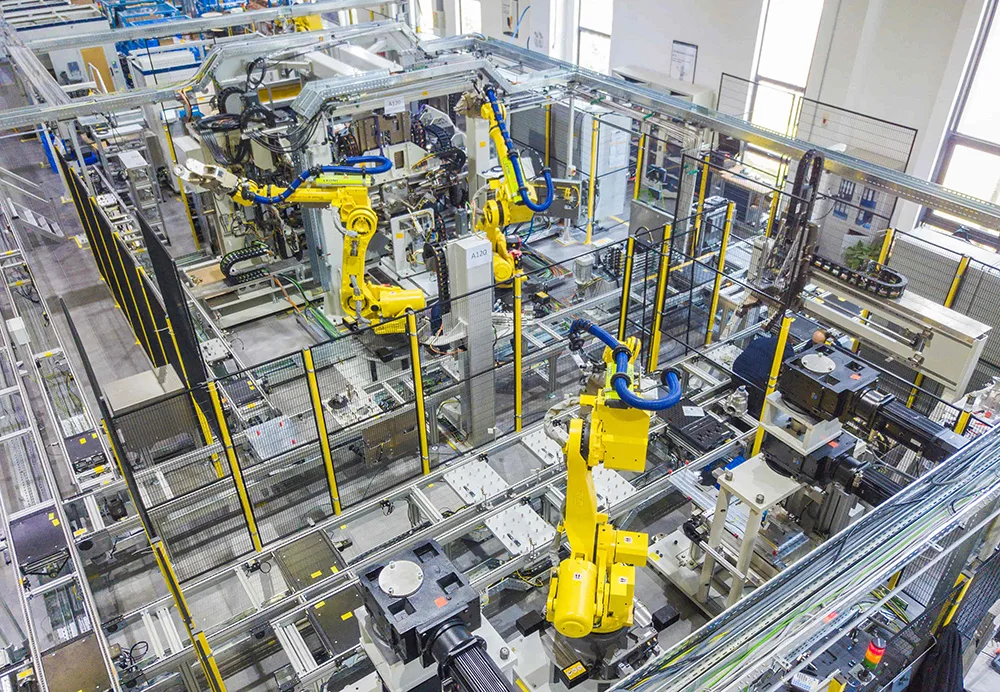
Differential assembly and test line from above: press stations and robots
Differential assembly and test line from above: press stations and robots · Source: PIA Automation website ↗ · © the manufacturer, quoted for reference · Resized proportionally and converted to WebP
Differential assembly & test line · original schematic, not to scale; shows the working principle and modules
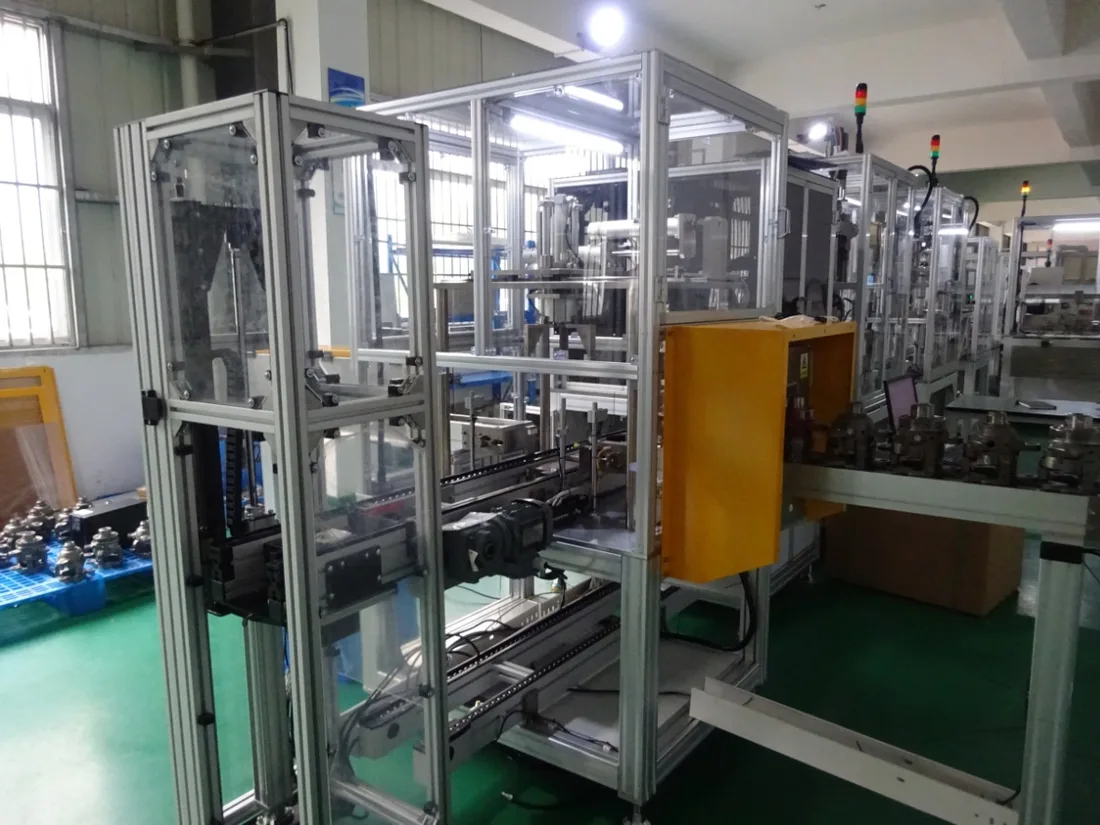
Differential assembly and test line: profile frames, servo press, pallet conveyor
Differential assembly and test line: profile frames, servo press, pallet conveyor · Source: Wuxi Mingfang Technology website ↗ · © the manufacturer, quoted for reference · Resized proportionally and converted to WebP
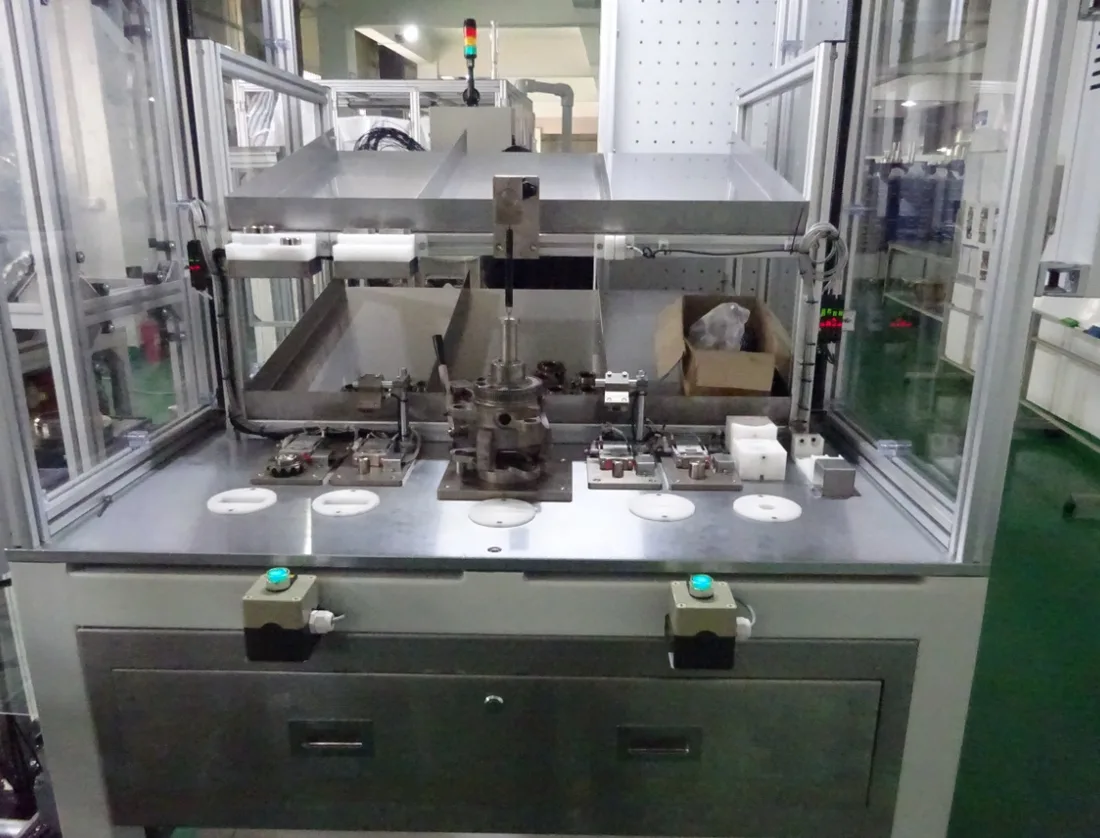
Differential press station: housing in a fixture, vertical press, guard around
Differential press station: housing in a fixture, vertical press, guard around · Source: Wuxi Mingfang Technology website ↗ · © the manufacturer, quoted for reference · Resized proportionally and converted to WebP

What it does

Links pressing, handling and torque checks of differentials into a traceable assembly and test process.

How it works

Pallets keep the assembly located between pressing and test stations; the press station makes the specified joints, and the test end drives through a coupling fixture and measures torque in both directions or under the relevant condition. Test criteria must follow the differential design; responses of ordinary gear differentials and those with locking or limited-slip mechanisms cannot be mixed.

Process sequence

  1. Load and identify the assembly
  2. Locate and press
  3. Move to the test station
  4. Couple and drive under the test condition
  5. Record torque and judge
  6. Divert and post-process

Key inputs

  1. Differential design and assembly list
  2. Press dimensions, lubrication and joint datums
  3. Test-end restraint, direction, speed and torque standard

Common problems

  1. Coupling not engaged or fixture slipping
  2. Abnormal rotation after pressing
  3. Mixing test conditions or counting fixture friction in the assembly torque

Limits of application

  1. A press-and-test line does not mean all internal parts are assembled automatically
  2. End-of-line torque testing covers different things than tooth contact, backlash or noise tests

Functional modules

Pallet conveying

Locates and circulates the assembly

Press-fit station

Joins the specified components

Rotation test

Couples the drive end and measures torque

Identification and diverting

Ties serial number, results and outfeed together

Manufacturer & technical sources

Continue with manufacturer product pages, operating principles and technical information for this equipment type.

ONLY ON MECHWIKI / AGGREGATED

Aggregated references: models, makers, patents & videos

References scattered across model articles, vendor sites and patent databases, gathered under this machine. Checked items are listed; the rest are offered as ready-to-open searches.

Equipment and core-unit manufacturers1

Manufacturer references for whole machines, subsystems and related processes; each item states its scope.

  • Guangzhou SEI Intelligence

    Differential assembly line for press fitting, riveting and inspection · Machine example

    This is a published assembly line example. Verify the original CAD model's supplier independently. Confirm precision, yield and unattended operation with measured results.

    Manufacturer reference

Patents: how others built it

Patents are useful for drawings and mechanism ideas. None has been vetted for this entry yet, so here are searches pre-filled with the machine name.

Videos: see it run

No licensed video is hosted for this machine yet; these searches are pre-filled with its name.

3D MODELS

3D models and download information

Explore structure and assembly with models. Download methods, file formats and terms are provided by the original article or mini program.

Find more in the model library →