
EQUIPMENT / PRINCIPLE / DESIGN

Die-casting cell with extractor

Links the die casting machine, ladling, spraying and extraction into a coordinated production cell.

Equipment principle & structureRequest design help ↗
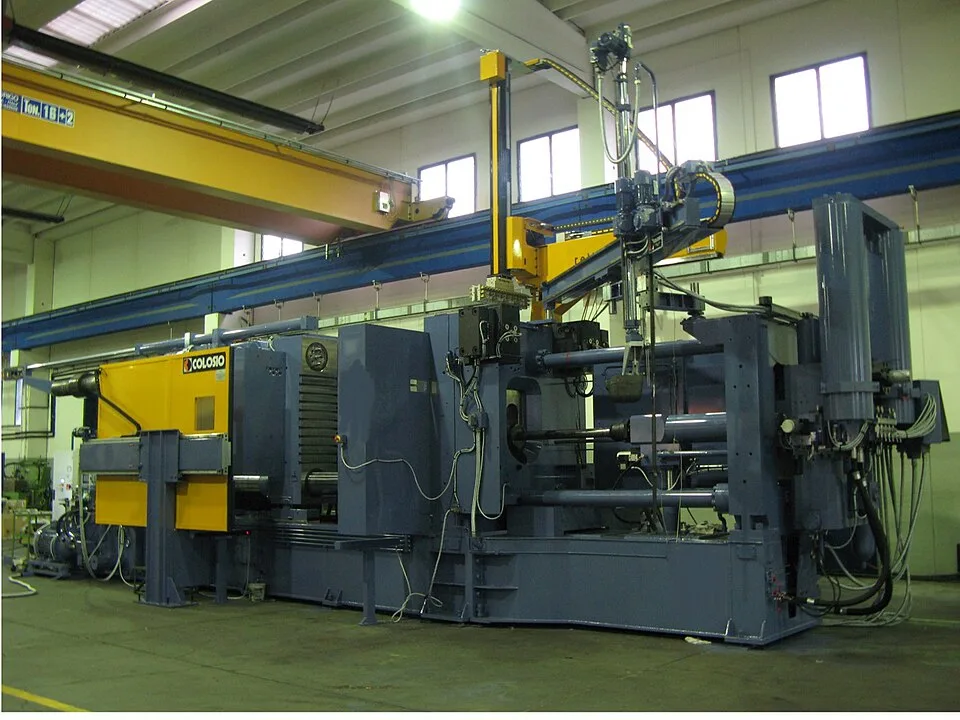
Cold-chamber die-casting machine (2000-ton lock) with overhead pour and extract units
Cold-chamber die-casting machine (2000-ton lock) with overhead pour and extract units · Source: Wikimedia Commons ↗ · by PlugPray · Public domain · Resized and converted to WebP
Die-casting cell with extractor · original schematic, not to scale; shows the working principle and modules
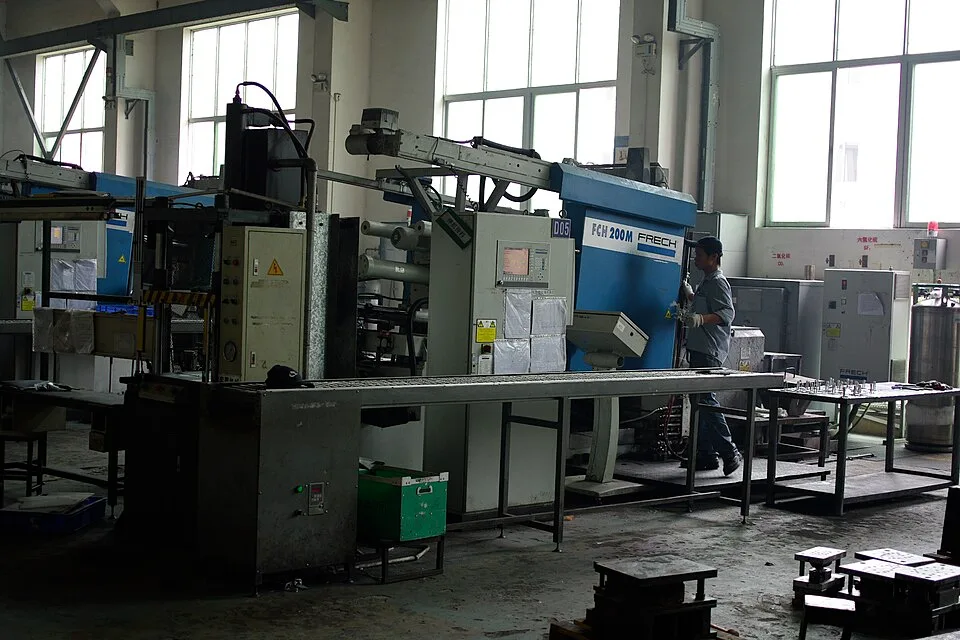
Magnesium die-casting machine with a parts conveyor and work table
Magnesium die-casting machine with a parts conveyor and work table · Source: Wikimedia Commons ↗ · by Swoolverton · CC BY 3.0 · Resized and converted to WebP
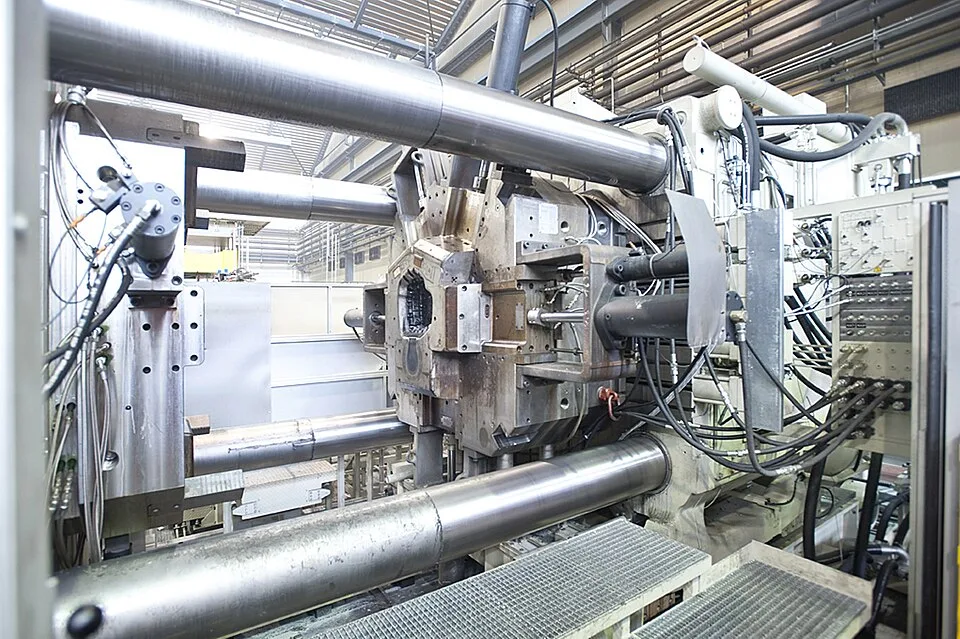
Clamping unit and mold area of a 4000-ton die-casting machine
Clamping unit and mold area of a 4000-ton die-casting machine · Source: Wikimedia Commons ↗ · by Handtmann01 · CC BY-SA 3.0 · Resized and converted to WebP

More real-machine photos on Wikimedia Commons: Die casting ↗

What it does

Links the die casting machine, ladling, spraying and extraction into a coordinated production cell.

How it works

The ladle feeds metal to the shot system, the machine closes, injects and cools, the extractor enters when permitted and removes the casting, and spraying and blow-off prepare the die for the next cycle. Cell control checks the status of machine, robots and peripherals to keep their motions from interfering.

Process sequence

  1. Confirm machine, die and peripherals are ready
  2. Ladle, close and inject
  3. Cool and open
  4. Extract and transfer
  5. Spray, blow off and withdraw
  6. Confirm the next cycle

Key inputs

  1. Alloy and casting envelope
  2. Machine and robot interface
  3. Ladling, spraying and extraction sequence
  4. Downstream quenching, trimming and inspection

Common problems

  1. Peripherals not withdrawn causing interference
  2. Ladling and die temperature variation affecting the machine
  3. Unstable extraction attitude
  4. Recovery without status checks causing wrong sequence

Limits of application

  1. Whether extraction, quenching, trimming and inspection are integrated depends on the actual configuration
  2. Cell automation does not mean castings need no inspection

Functional modules

Die casting machine

Completes the forming cycle

Ladling and holding

Supply metal steadily

Extraction and transfer

Send castings downstream

Spraying and cell interlocks

Prepare the die and coordinate equipment

Manufacturer & technical sources

Continue with manufacturer product pages, operating principles and technical information for this equipment type.

ONLY ON MECHWIKI / AGGREGATED

Aggregated references: models, makers, patents & videos

References scattered across model articles, vendor sites and patent databases, gathered under this machine. Checked items are listed; the rest are offered as ready-to-open searches.

Patents: how others built it

Patents are useful for drawings and mechanism ideas. None has been vetted for this entry yet, so here are searches pre-filled with the machine name.

Videos: see it run

No licensed video is hosted for this machine yet; these searches are pre-filled with its name.

3D MODELS

3D models and download information

Explore structure and assembly with models. Download methods, file formats and terms are provided by the original article or mini program.

Find more in the model library →