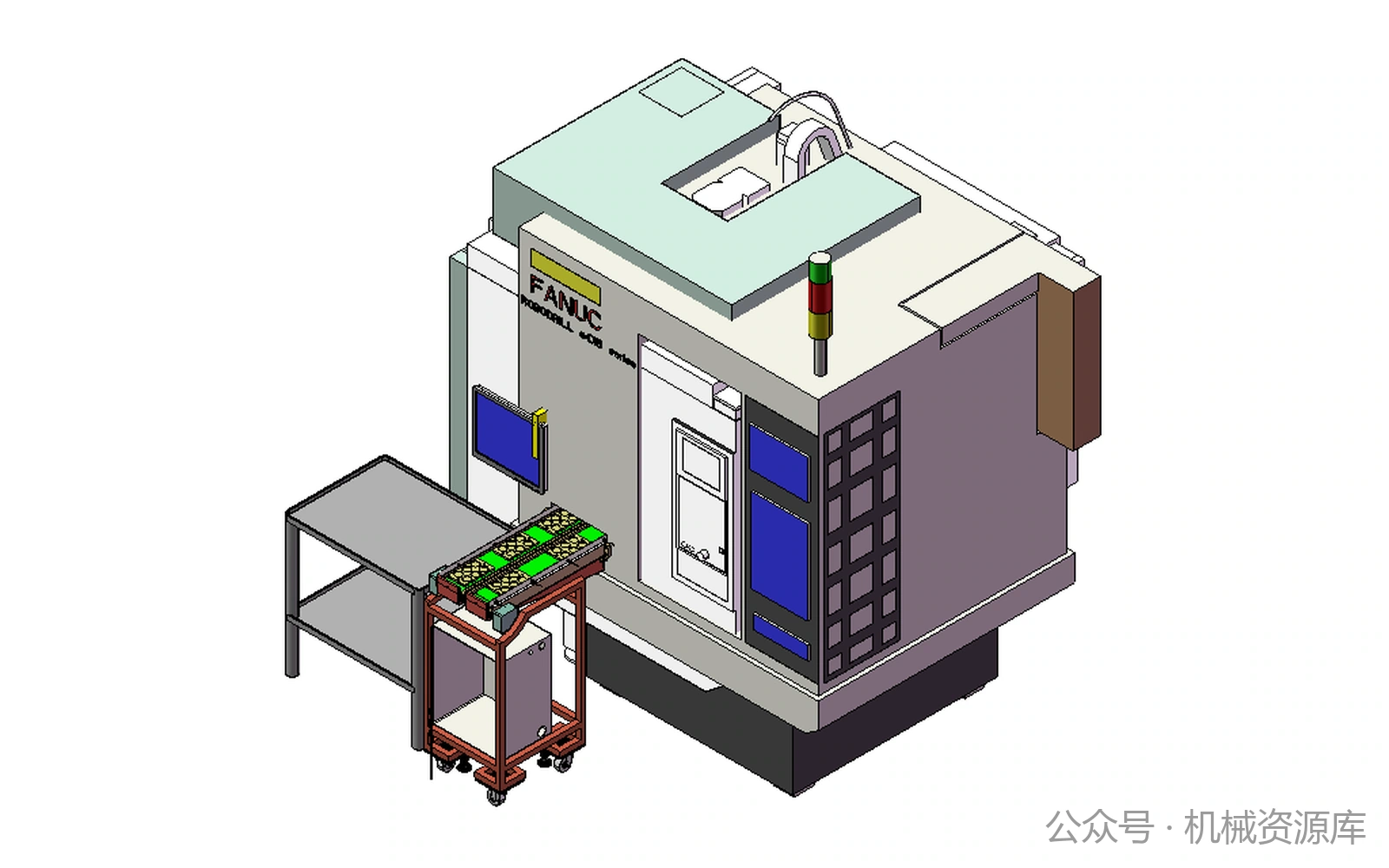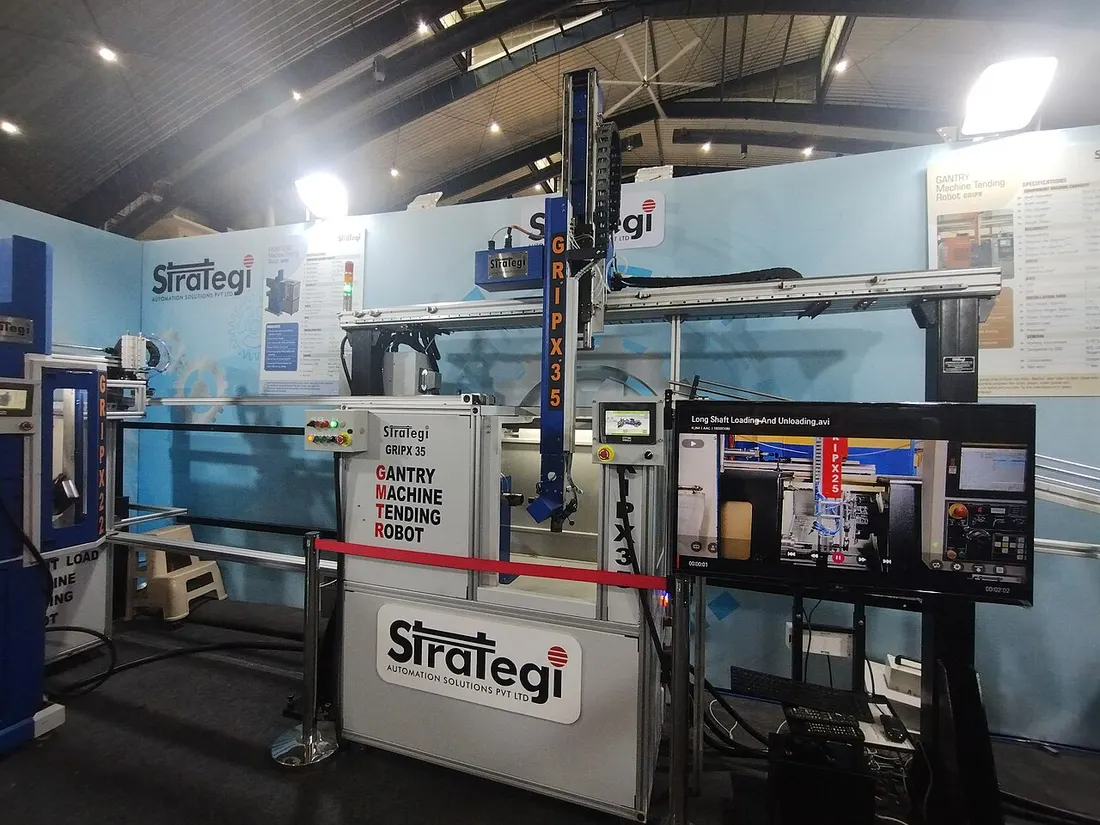

What it does
Exchanges blanks and finished parts into and out of the guarded space of a CNC machine, coordinated with the machine door, fixture and machining cycle.
How it works
The automatic loader picks a blank from the table, waits until the machine has stopped and the door may open, enters, takes out the finished part and loads the blank into the chuck or fixture; it releases the gripper only after the machine confirms clamping. The machine starts the next cycle only after the gripper has left the hazard envelope and the door has closed.
Process sequence
- Confirm the machine's exchange conditions
- Open the door and enter
- Grip, then release the finished part from the fixture
- Remove it and load the blank
- Confirm clamping and gripper withdrawal
- Close the door and start machining
Key inputs
- Blank and finished part shapes and gripping method
- Chuck clamping, chips and coolant
- Door state, avoidance coordinates and interruption recovery
Common problems
- Gripper releasing before the fixture is clamped
- Chips causing clamping errors
- Interference with the door or turret, and wrong states on recovery
Limits of application
- A guard enclosure is not a collaborative robot safety function
- Confirmation logic for lathe chucks, machining-center vises and pallet interfaces must be implemented separately for each machine
Functional modules
Pick table
Identifies blank and finished part positions
Transfer gripper
Moves along a safe path inside and outside the machine
Door and fixture interface
Confirms open/closed and clamped states
Cycle control
Coordinates with machining and fault recovery
Manufacturer & technical sources
Continue with manufacturer product pages, operating principles and technical information for this equipment type.