
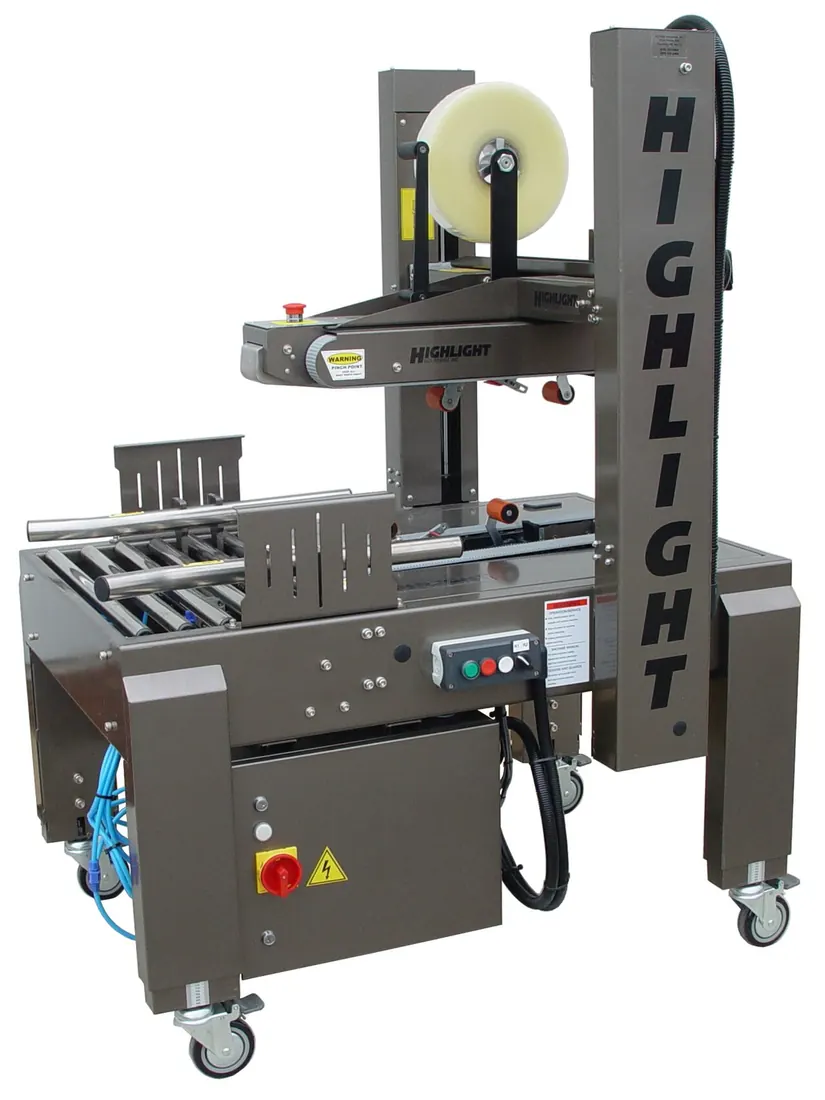

What it does
Tapes the seams of closed cases, or folds flaps and tapes them where configured, keeping flaps from opening during handling.
How it works
A tape case sealer grips and drives the case with belts so its seam passes the taping head, and tape is applied along the case face and down the ends. Upper and lower heads can seal top and bottom seams; random-size machines must also adapt to varying width and height.
Process sequence
- Confirm case and size settings
- Close flaps or receive folded cases
- Drive past the taping heads
- Apply and cut tape
- Discharge and check seams
Key inputs
- Case width, height, weight and crush strength
- Tape material, width and adhesive suitability
- Uniform or mixed case sizes
Common problems
- Skewed cases putting tape off the seam
- Loose tape, broken tape or poor cuts
- Over-tight drive crushing cases
Limits of application
- Batch-adjusted and random-size machines differ in capability
- Taping heads and automatic flap folding are separate functions
Functional modules
Drive belts
Carry the case past the taping heads
Taping heads
Feed, apply and cut tape
Size adjustment
Adapts to case width and height
Flap folders
Close flaps on automatic models
Manufacturer & technical sources
Continue with manufacturer product pages, operating principles and technical information for this equipment type.