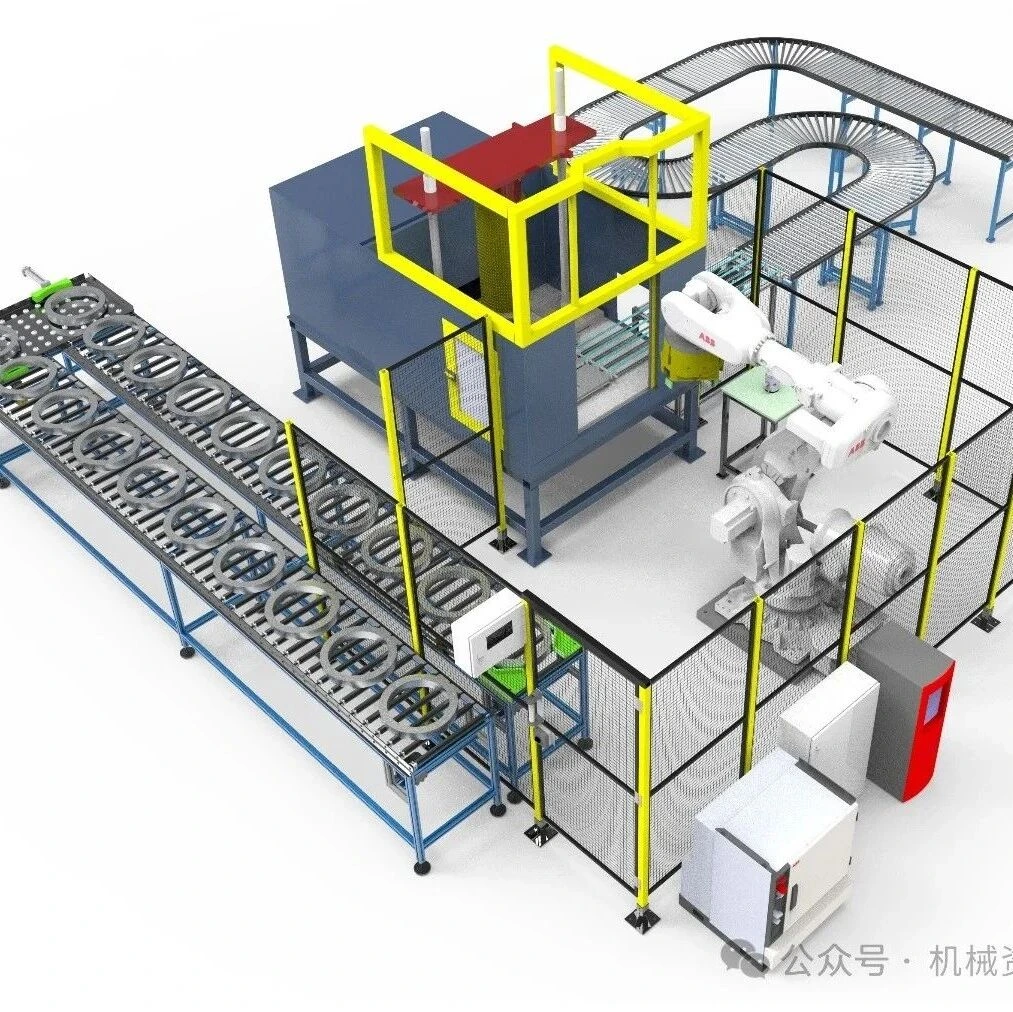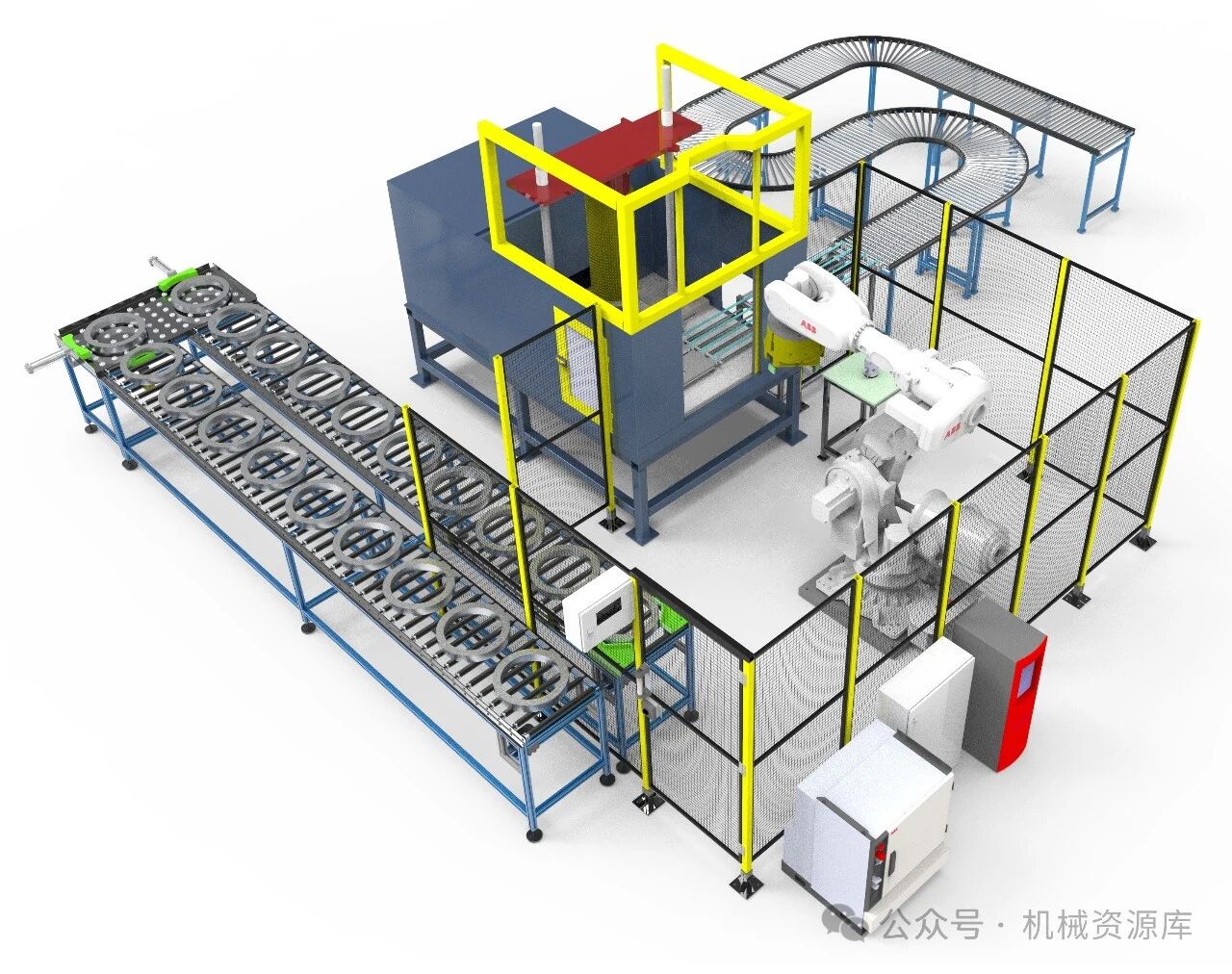

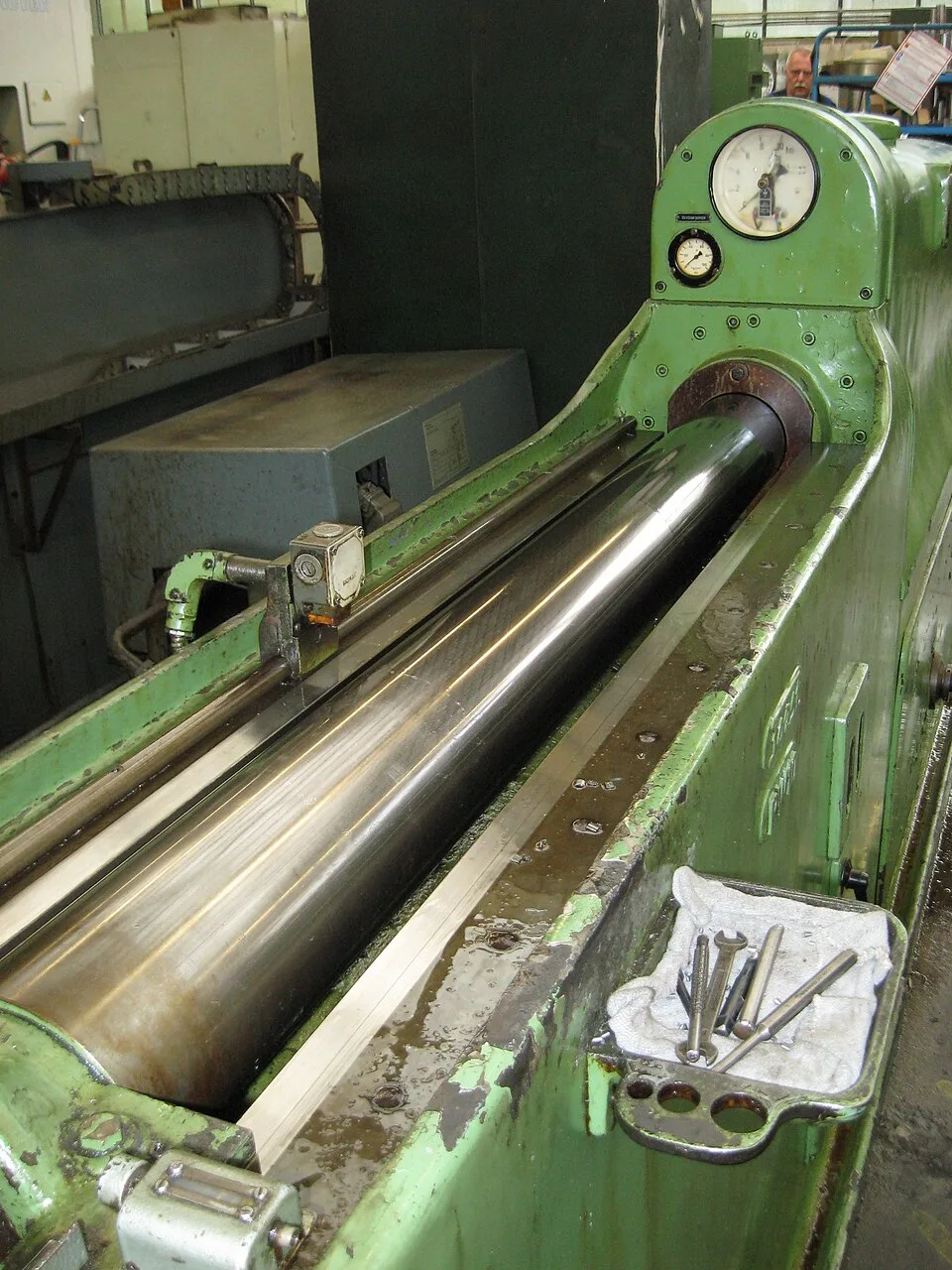
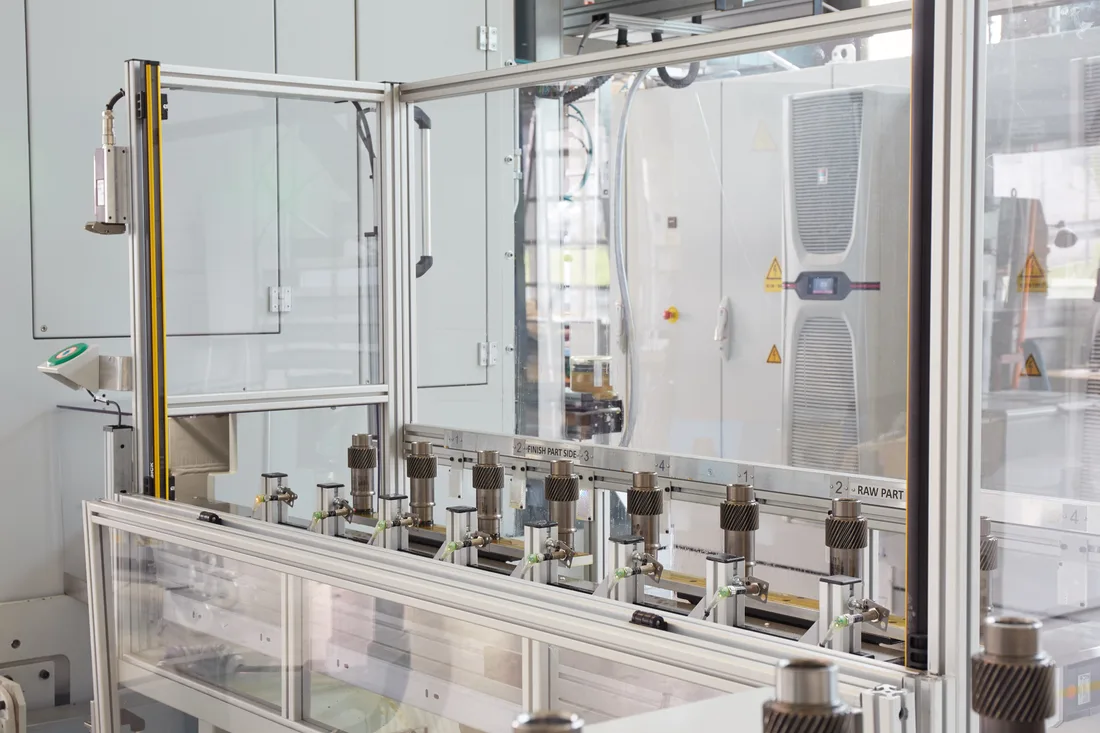
What it does
Cuts with a multi-tooth broach in sequence, forming a specific internal or surface shape in one main stroke.
How it works
Each tooth of the broach removes part of the material in turn, with roughing and finishing teeth sharing stock removal by tool design. In linear broaching the tool or work passes along a controlled stroke, and the final section depends on broach shape, guiding and pre-hole condition.
Process sequence
- Check pre-hole and shape
- Locate and clamp the work
- Engage the broach
- Complete the controlled broaching stroke
- Withdraw and clean
- Measure and unload
Key inputs
- Broach shape, length and condition
- Material and pre-hole allowance
- Machine force and stroke
- Locating, guiding and chip space
Common problems
- Broach wear affecting size
- Uneven pre-hole allowance changing load
- Guide or locating error shifting the profile
Limits of application
- This page covers linear broaching; rotary broaching moves differently
- Dedicated tool cost and changeover frequency must be considered together
Functional modules
Broach and puller
Provide the multi-tooth cutting shape and transmit force
Main drive and guides
Organize the pull or push stroke
Work locating
Takes cutting force and keeps datums
Coolant, chip removal and return
Support continuous work
Manufacturer & technical sources
Continue with manufacturer product pages, operating principles and technical information for this equipment type.