
EQUIPMENT / PRINCIPLE / DESIGN

Baby bottle & cap assembler

Aligns baby bottles with their cap assemblies, screws or presses them together and transfers them to the finished-product outlet.

Equipment principle & structureRequest design help ↗
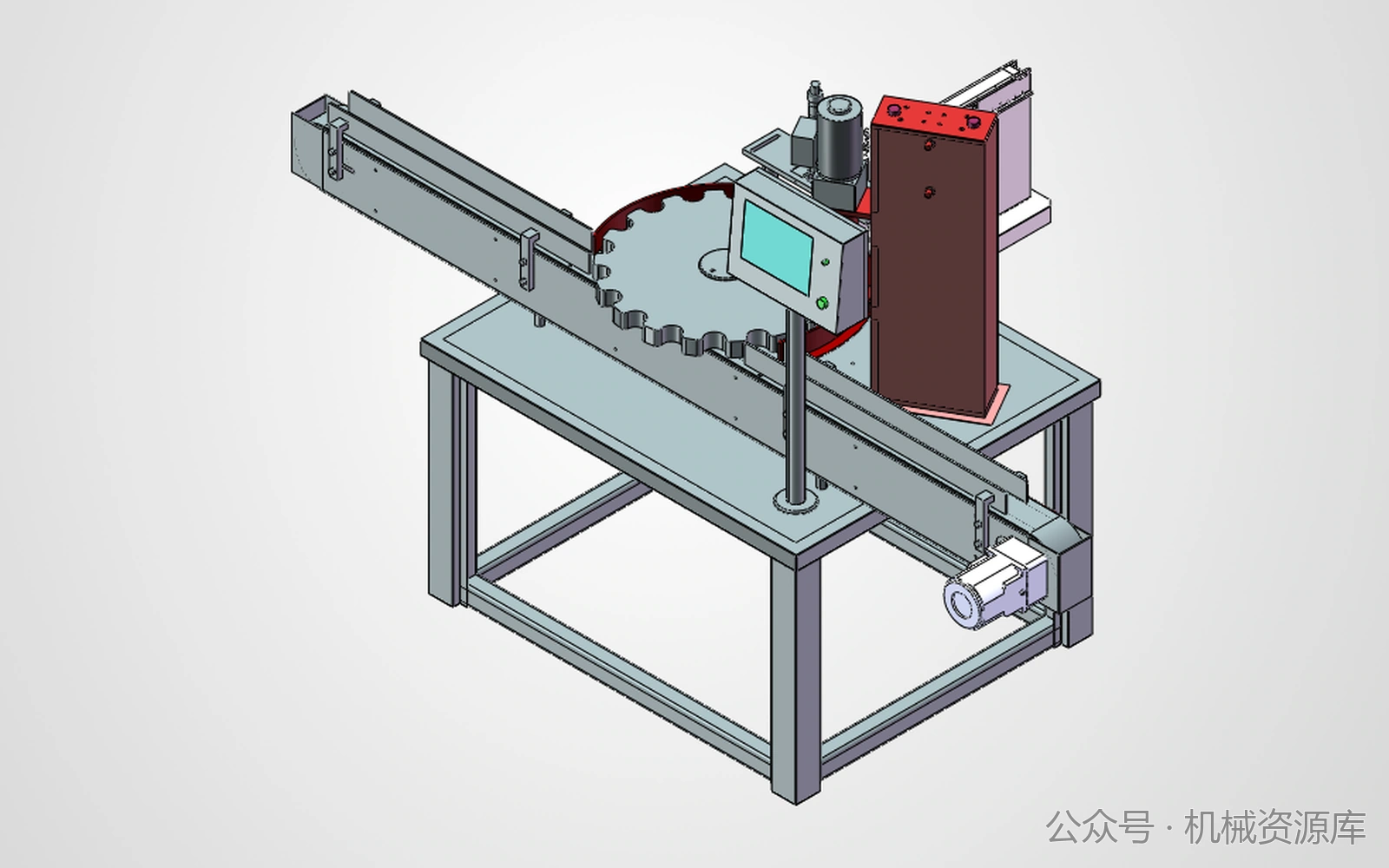
Baby bottle & cap assembler · CAD model
Baby bottle & cap assembler · CAD model · Mechanical resource library channel
Baby bottle & cap assembler · original schematic, not to scale; shows the working principle and modules
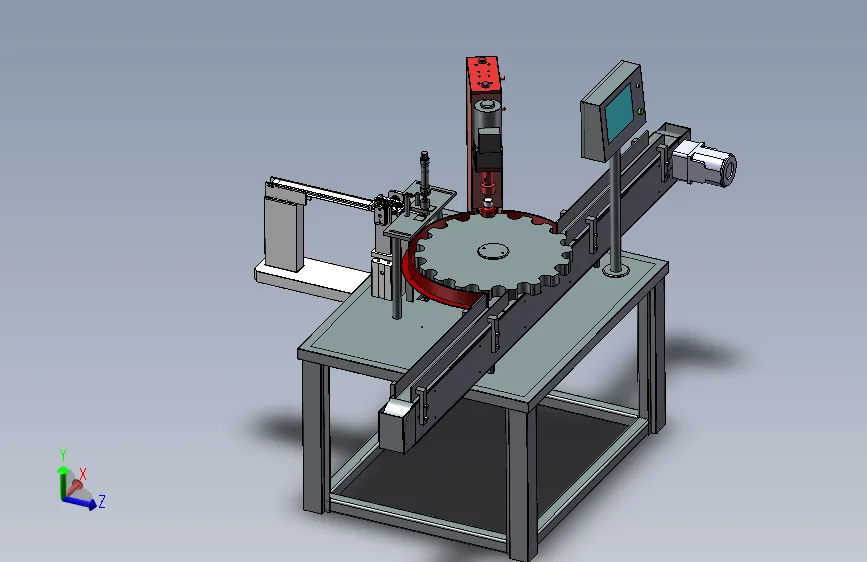
Indexing-dial capping layout (3D model): bottles in dial pockets, servo capping head
Indexing-dial capping layout (3D model): bottles in dial pockets, servo capping head · LazyStones 3D model · Public model library reference image · Resized proportionally and converted to WebP
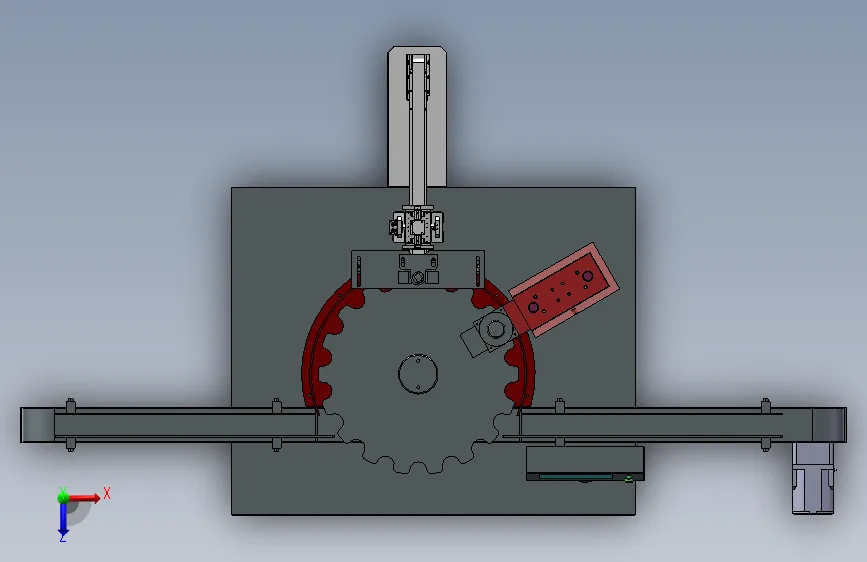
Same model, top view: infeed into the dial, cap placing, capping before discharge
Same model, top view: infeed into the dial, cap placing, capping before discharge · LazyStones 3D model · Public model library reference image · Resized proportionally and converted to WebP
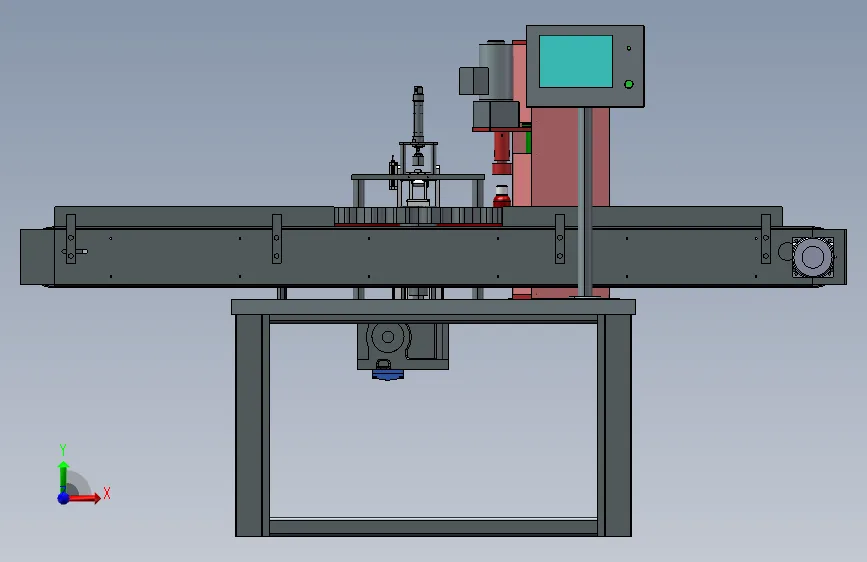
Same model: cap press over the dial, touch screen, gear motor under the table
Same model: cap press over the dial, touch screen, gear motor under the table · LazyStones 3D model · Public model library reference image · Resized proportionally and converted to WebP

What it does

Aligns baby bottles with their cap assemblies, screws or presses them together and transfers them to the finished-product outlet.

How it works

Taking a bottle with screw cap as an example, the bottle is held in a circulating carrier, the pick head takes the cap and orients it, and once cap and bottle mouth are coaxial, controlled downforce and rotation make the thread connection. Different cap assemblies may have valve, seal ring and teat fitted first, with the transparent protective cover pressed on last.

Process sequence

  1. Confirm bottle and cap version
  2. Locate the bottle
  3. Pick and align the cap assembly
  4. Screw on or press on by connection type
  5. Check the cap
  6. Unload and return the carrier

Key inputs

  1. Bottle mouth and cap thread
  2. Pick surface, straw attitude and flexible teat
  3. Axial force, screwing end point and cleanliness

Common problems

  1. Cross-threading, tilted caps and over-tightening
  2. Damaged soft teats
  3. Tangled straws, missing seal rings and protective covers not seated

Limits of application

  1. Screw capping differs from snap capping
  2. An assembled part has not thereby passed food-contact, sealing or hygiene testing

Functional modules

Bottle carrier

Supports the bottle and stops it turning

Cap feeding

Distinguishes assemblies with and without straw

Pick-and-screw head

Aligns and screws on

Circulating unloading

Takes off finished parts and returns carriers

Manufacturer & technical sources

Continue with manufacturer product pages, operating principles and technical information for this equipment type.

ONLY ON MECHWIKI / AGGREGATED

Aggregated references: models, makers, patents & videos

References scattered across model articles, vendor sites and patent databases, gathered under this machine. Checked items are listed; the rest are offered as ready-to-open searches.

Equipment and core-unit manufacturers1

Manufacturer references for whole machines, subsystems and related processes; each item states its scope.

  • AMAN INDUSTRY

    Example of an automatic baby bottle cap assembly machine · Machine example

    The source describes bottle cap assembly. The stations for nipples, valves and sealing films need separate evidence, as does each operation of the patent described here. Applying the finished cap to a bottle is a separate process.

    Manufacturer reference

Patents: how others built it

Patents are useful for drawings and mechanism ideas. None has been vetted for this entry yet, so here are searches pre-filled with the machine name.

Videos: see it run

No licensed video is hosted for this machine yet; these searches are pre-filled with its name.

3D MODELS

3D models and download information

Explore structure and assembly with models. Download methods, file formats and terms are provided by the original article or mini program.

Find more in the model library →