

What it does
Finishes existing holes by boring, often combined with milling, drilling and facing.
How it works
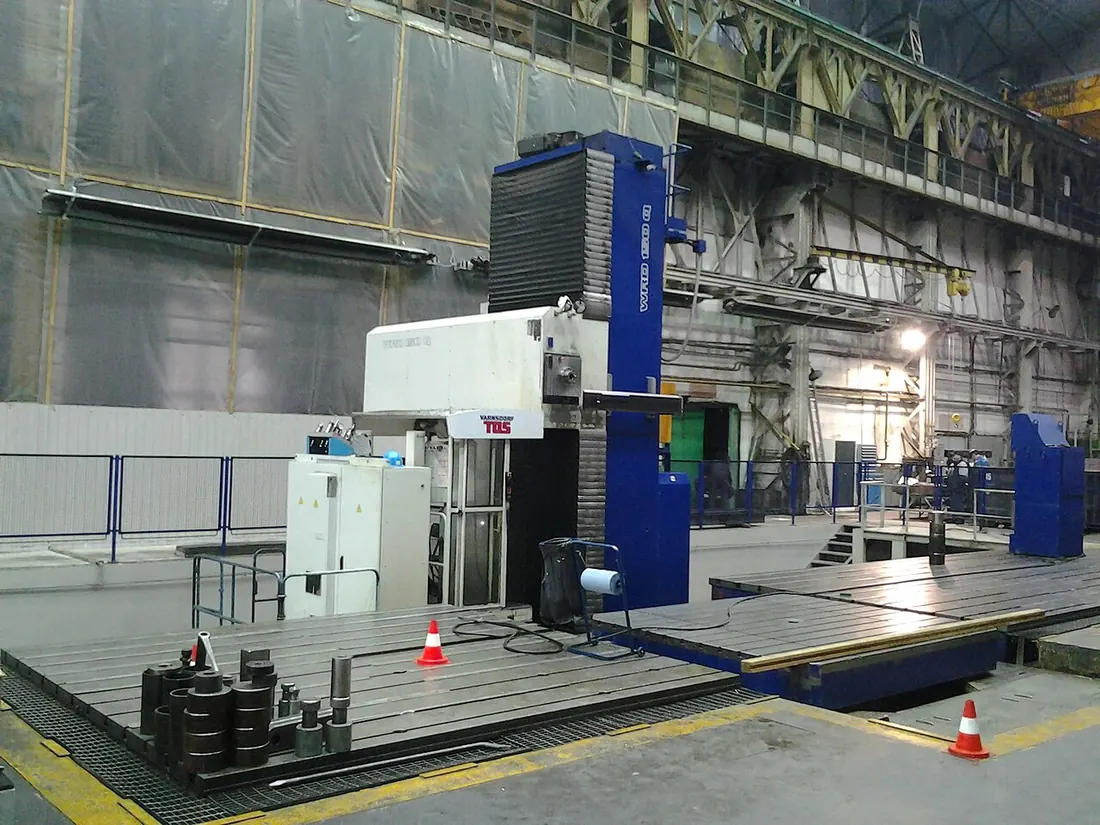
The rotating boring tool removes material from the wall of a pre-made hole, and feed changes depth and position. The horizontal boring mill example has an extendable boring spindle and column or ram motion for reaching inner surfaces of large parts and machining hole patterns.
Process sequence
- Check pre-holes and datums
- Fixture and align
- Set boring tool size and extension
- Rough and finish bore with related operations
- Measure the hole pattern
- Unload
Key inputs
- Pre-hole size and allowance
- Hole spacing and datums
- Bar extension and interference
- Part mass, shape and clamping
Common problems
- Long boring bars deflecting and chattering
- Datum and fixturing errors affecting position
- Thermal state and tool wear affecting hole size
Limits of application
- Boring generally enlarges or corrects existing holes
- Axis names and layout vary by maker, so one W/Z naming should not be applied to all boring machines
Functional modules
Boring spindle and bar
Machine existing holes
Ram or column
Changes tool reach
Table and fixtures
Set the hole pattern datums
Feed control and measurement
Manage hole size, position and depth
Manufacturer & technical sources
Continue with manufacturer product pages, operating principles and technical information for this equipment type.