
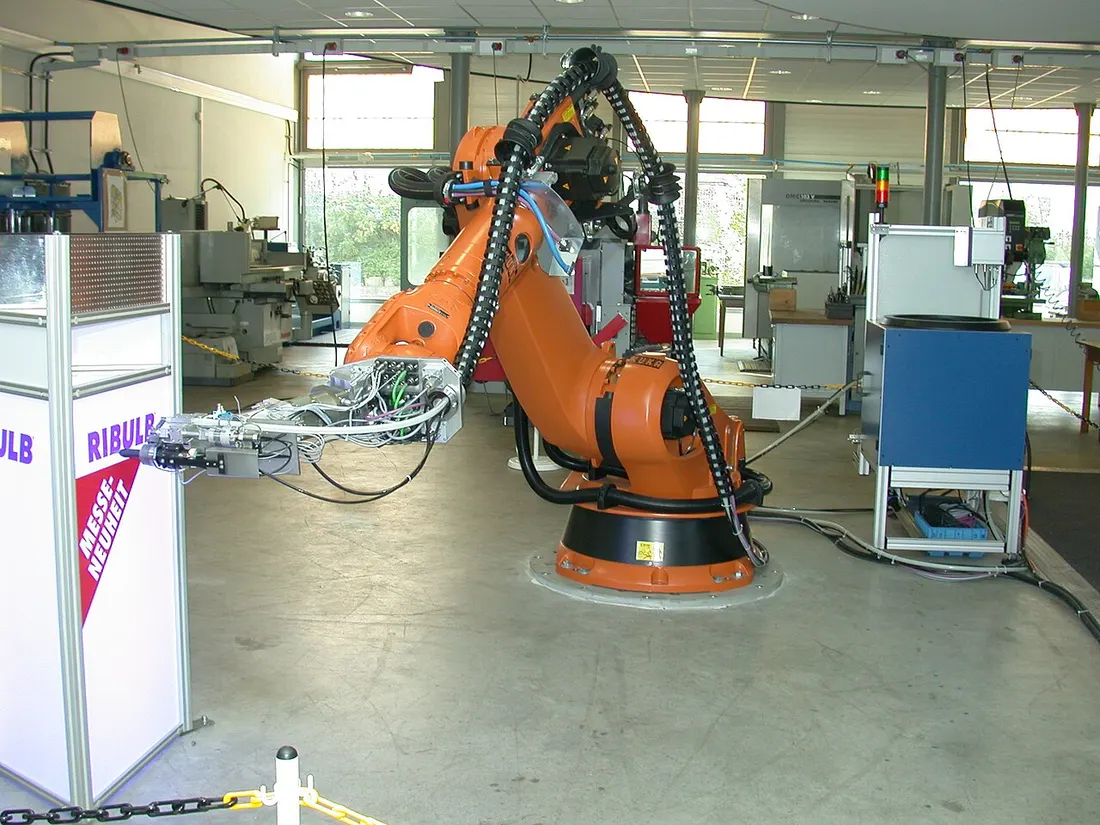

What it does
Feeds blind rivets automatically and sets them from one side, forming a head on the inaccessible side of the pre-drilled hole.
How it works
The nosepiece supports the rivet head while the jaws grip and pull the mandrel back, and the mandrel head expands the rivet tail into a closing head. At the designed break point the mandrel snaps, the spent mandrel goes to the collection path, and the next rivet is loaded.
Process sequence
- Feed and hold a rivet
- Align and insert into the hole
- Seat the nosepiece on the part
- Pull the mandrel to form the joint
- Break and remove the mandrel
- Prepare the next rivet
Key inputs
- Stack thickness, hole size and hole quality
- Rivet material, grip range and type
- Nosepiece, pulling force and stroke, and mandrel path
Common problems
- Missed feeds or reversed rivets
- Jaws slipping, mandrels not breaking or mandrel jams
- Hole or stack mismatch leaving loose joints
Limits of application
- Blind rivets usually need a pre-drilled hole
- This differs from self-piercing riveting, which needs no pre-drilled hole
Functional modules
Rivet feeding
Delivers single fasteners to the tool
Nosepiece and jaws
Support the rivet body and grip the mandrel
Pulling drive
Deforms the rivet body by stroke and force
Mandrel collection
Removes broken mandrels
Manufacturer & technical sources
Continue with manufacturer product pages, operating principles and technical information for this equipment type.