
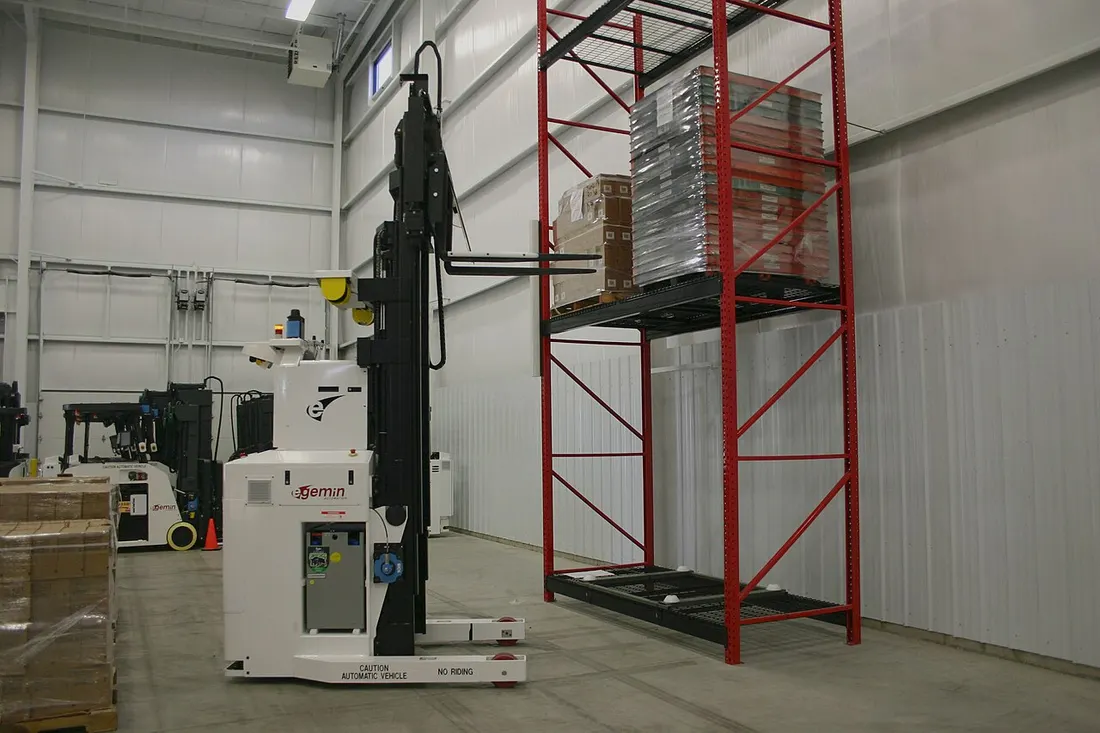

What it does
Moves pallets and similar loads between set pick and drop points by driving automatically and raising and lowering its forks.
How it works
The navigation system determines the vehicle's position on site, drive control brings it to the pick or drop area, and forks and lift enter the pallet and raise or lower it. Load sensing, vision and similar options check pick and drop status, while obstacle detection and task scheduling together constrain travel and station handovers.
Process sequence
- Receive the transport task
- Reach the pick point and confirm the pallet
- Align, insert forks and lift
- Travel on a permitted route
- Set down at the target and withdraw forks
- Report task and load status
Key inputs
- Pallet fork openings and bottom board condition
- Load centre of gravity and lift height
- Floor slopes and aisles
- Navigation environment, station positioning and mixed traffic
Common problems
- Fork opening and pallet position errors
- Overhanging goods outside the detection range
- Environment changes affecting localization
- Station handover and load status not matching
Limits of application
- Low-lift, stacker and reach vehicles have different capabilities
- An automated forklift is not suitable for any outdoor road
- Navigation accuracy and final pallet placement accuracy must be confirmed separately
Functional modules
Drive, steering and body
Organize floor travel
Forks and lift
Pick up and set down loads
Navigation and environment sensing
Determine position and operating conditions
Task control and power
Link stations and charging
Manufacturer & technical sources
Continue with manufacturer product pages, operating principles and technical information for this equipment type.